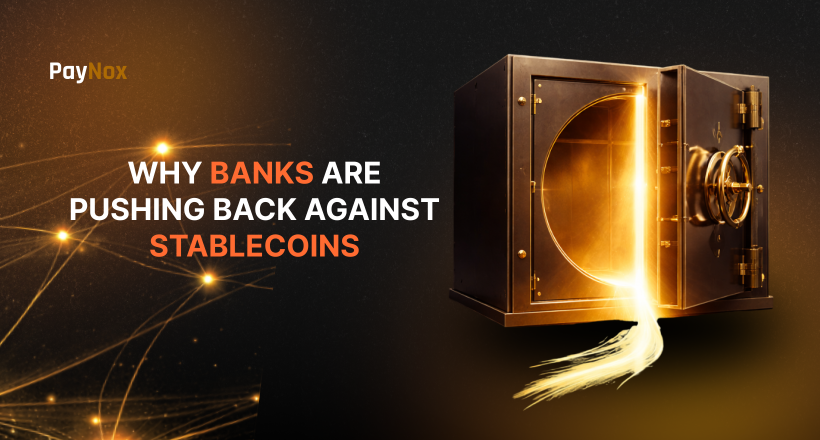
Why Banks See Stablecoins as a Threat to Their Deposit Model
The rise of stablecoins is creating a new point of tension within the financial system. At the center of it is a fundamental question: who controls liquidity?
The Role of Deposits in Banking
Traditional banks rely heavily on deposits. Customer funds are not just stored — they are used to support lending, manage liquidity, and generate revenue.
This model has been stable for decades.
However, it depends on one key assumption: that most customer funds remain within the banking system.
How Stablecoins Change the Model
Stablecoins introduce an alternative way to hold and transfer value.
Instead of keeping funds in a bank account, users can hold them in digital wallets, outside of traditional banking infrastructure. These assets can still be used for payments, transfers, and financial operations.
As a result, liquidity can begin to shift.
The Liquidity Challenge
If a significant portion of funds moves into stablecoins, banks may face reduced deposit bases.
This impacts their ability to lend, manage capital, and generate income from traditional activities. While the shift may start gradually, its long-term implications are significant.
This is why many banks are cautious — or resistant — toward stablecoin expansion.
More Than a Technology Shift
This tension is not primarily about blockchain technology. It is about the structure of the financial system.
Stablecoins create a parallel layer where value can exist and move independently of banks. This challenges the traditional role of financial institutions as intermediaries.
What Happens Next
Banks are unlikely to disappear, but they may need to adapt.
Some may integrate stablecoin-based services. Others may push for regulatory frameworks that limit their impact. In either case, the relationship between banks and digital assets is evolving.
Conclusion
Stablecoins are not just a new payment tool.
They represent a shift in how liquidity is stored and accessed.
As adoption grows, the balance between traditional banking and blockchain-based systems will continue to change.
The key question is how these two models will coexist — and which one will define the future of finance.