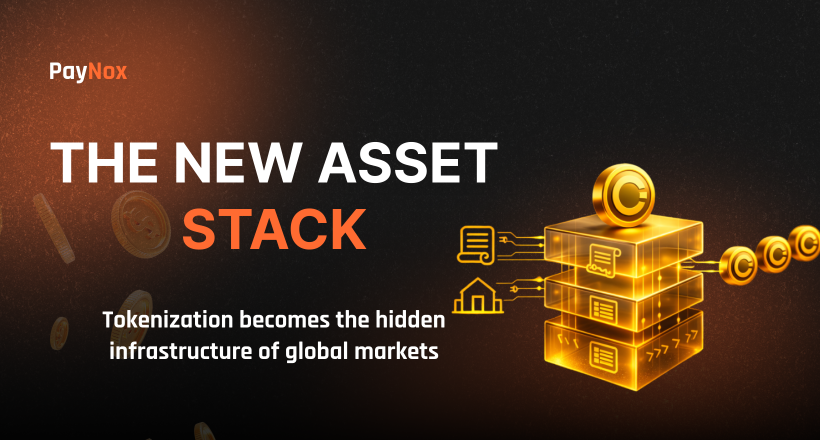
Tokenization Becomes the Hidden Infrastructure
Tokenization becomes the hidden infrastructure of global markets.
The tokenization of real-world assets is progressing from early experimentation to a structural shift in how global markets operate. The critical change is not only the digitization of assets, but the transformation of settlement itself. Tokenized securities settle in minutes instead of days, drastically reducing counterparty risk and freeing capital that was traditionally locked during clearing cycles.
A new liquidity layer for global finance
When assets become programmable, liquidity becomes more dynamic. Tokenized bonds, funds, commercial paper, and real estate can be traded around the clock, without relying on legacy intermediaries. This constant availability increases market depth and gives institutional players more flexibility in managing portfolios. It also allows smaller issuers and investors to participate in markets that were historically gated.
The multi-trillion-dollar RWA opportunity
Analysts project that RWA tokenization could expand into a multi-trillion-dollar market as infrastructure reaches institutional scale. What drives this growth is efficiency: faster settlement, unified record-keeping, transparent audit trails, and reduced operational overhead.
Tokenization helps solve long-standing structural challenges — fragmentation, slow clearing, and opaque reconciliation — enabling capital to flow more predictably across jurisdictions.
Infrastructure shift, not a trend
The rise of tokenized assets will not be a dramatic or sudden moment. Instead, it mirrors the early evolution of cloud computing or digital payments: a quiet migration to systems that are cheaper, faster, and more reliable.
Financial institutions won’t adopt tokenization because it’s innovative — they’ll adopt it because it works better than the status quo.
The next foundation of global markets
As more assets transition to on-chain formats, tokenization becomes the invisible utility layer powering settlement, liquidity, and compliance. What was once considered experimental is now becoming foundational.
The future infrastructure of global finance is emerging — and it’s built on tokenized rails.