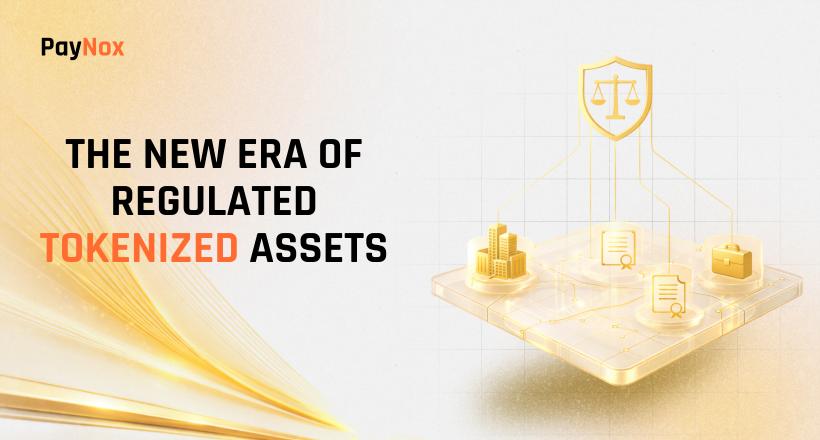
The New Era of Regulated Tokenized Assets
The global financial ecosystem is entering a new chapter: tokenized assets are no longer experimental products — they are becoming regulated, standardized, and institution-ready.
The recent Memorandum of Understanding between ADI Foundation, Finstreet, and BlockBooster highlights a coordinated attempt to create legally compliant frameworks for Web3 investment products. This marks a turning point in how institutions approach tokenization.
Why Regulation Matters Now
For years, Web3 grew faster than regulators could follow. Today, authorities and enterprises are actively shaping governance models that balance innovation with stability.
Regulation is no longer seen as an obstacle but as an enabler for trust, investor protection, and mainstream adoption.
Tokenized assets require standards for custody, verification, settlement, and compliance — and institutional partners are now building them collaboratively.
Cross-Border Standards Create Real Liquidity
One of the biggest challenges in tokenization has always been fragmentation.
Different jurisdictions, mismatched requirements, and inconsistent legal frameworks slowed global adoption.
The MoU signals a different direction:
organizations are working to harmonize rules across markets, enabling tokenized assets to move seamlessly between ecosystems.
This directly increases liquidity, accessibility, and the scalability of tokenized financial products.
Regulated RWAs Unlock Institutional Capital
Traditional investors are ready to enter Web3 — but only through compliant, transparent instruments.
Regulated tokenized assets offer:
clear ownership structures
verifiable asset backing
automated compliance
minimized counterparty risk
enterprise-grade transparency
This combination makes tokenized funds, bonds, invoices, and commodities attractive to banks, asset managers, and fintech companies.