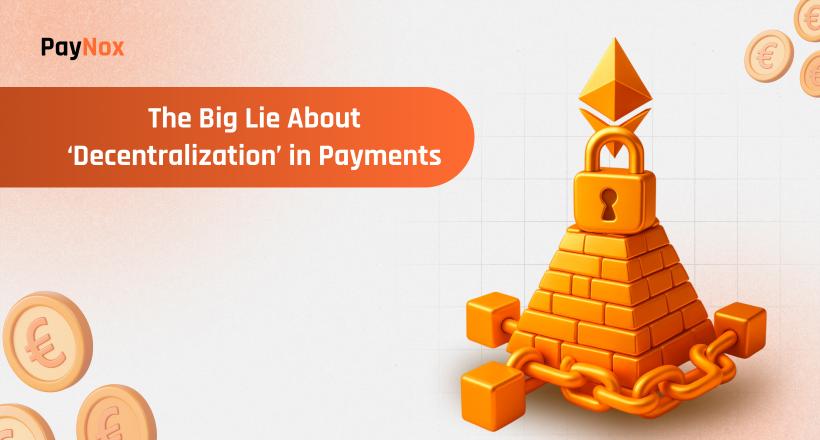
The Big Lie About ‘Decentralization’ in Payments
“Fully decentralized payments.”
It’s a big promise — but in 2025, how often is it true?
Across Web3, most payment flows still rely on very centralized pieces:
— Centralized web apps as entry points
— Off-chain custody solutions
— Manual approval layers
— Opaque fees and settlement delays
The result? A poor user experience — and lost trust.
🧭 Where centralization really hides
Here’s what many “decentralized” platforms don’t mention:
● Frontend control — Even dApps often rely on centralized frontends — if it’s down, users can’t pay.
● Custody risks — Off-chain wallets or custodians hold user funds during key parts of payment flows.
● Manual delays — Approvals that should be automated often involve off-chain actors — introducing lag and risk.
● Fee opacity — Many systems hide fees in complex bridging or approval layers.
Users feel this — and they don’t trust it.
💡 Why it matters now
2025 users are more informed.
They understand decentralization — and they know when it’s fake.
What they want:
— Transparency
— Simplicity
— Control
If platforms fail to deliver this — they lose loyalty.
🔍 How PayNox does it differently
At PayNox, we design payment flows to avoid false “decentralization”:
● Transparent, on-chain triggers
● No hidden custody steps
● Seamless, instant payouts — cross-chain
● Clear fees, visible to users
Because in 2025, trust = transparency.
✅ Final thought
The “decentralization” myth is fading fast.
Users now demand payment flows that are simple, transparent — and truly user-first.
PayNox is helping build that future.
Follow us on Telegram or LinkedIn to see what’s next.