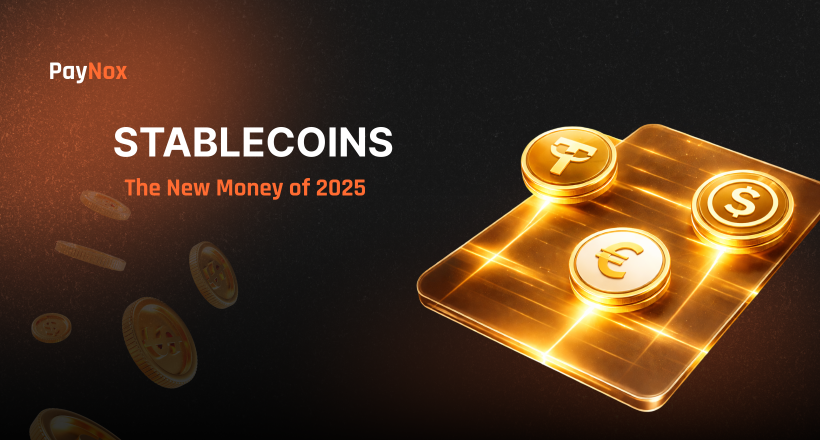
Stablecoins: The New Money of 2025
The financial landscape of 2025 is defined by a single shift: stablecoins are becoming the primary infrastructure for global payments. No longer viewed as experimental crypto assets, they now serve businesses, agencies, creators, and enterprises that require fast, predictable, and borderless transactions 🌍✨.
Traditional banking systems struggle to match this pace. International transfers can take days. Fees vary wildly depending on geography. Currency volatility complicates planning. And cross-border workflows break under regulatory friction.
Stablecoins solve these challenges with simplicity and speed.
Why stablecoins matter in 2025
💸 Instant settlement — payments clear within seconds, not days.
⚖️ Price stability — unlike other cryptocurrencies, stablecoins maintain predictable value.
📉 Lower fees — fewer intermediaries mean more efficient transactions.
🔁 Ideal for automation — subscriptions, retainers, SaaS billing become seamless.
🌐 Global access — businesses can work with clients anywhere without banking barriers.
For companies operating internationally, this is more than convenience — it’s competitive advantage.
Where PayNox fits into the shift
The challenge for most businesses isn’t whether they want stablecoins. It’s integrating them without technical overhead.
PayNox removes that complexity.
PayNox already supports the top stablecoins used worldwide:
— USDT (liquidity leader)
— USDC (institution-friendly)
— EURC (European-aligned stability)
With PayNox, businesses gain:
⚡️ instant global payouts
🔐 enterprise-grade security
🔁 automated billing flows
🧩 Web3 payments without writing code
This combination creates a frictionless financial layer that enhances both speed and reliability.
Looking ahead
As the world becomes more interconnected, the demand for stable, efficient, borderless payments will only increase. Stablecoins offer the reliability of fiat and the speed of blockchain — a perfect match for modern business operations.
👉 Stablecoins are not the future. They are the present. And the companies adopting them now will lead in 2025 and beyond.