Stablecoins in the EU Economy: A Game-Changer for Digital Transactions
The financial landscape in the European Union is evolving rapidly, with digital assets becoming a central part of the conversation. Among them, stablecoins stand out as one of the most impactful innovations, bridging the gap between traditional finance and cryptocurrencies.
At PayNox, we are at the forefront of this transformation, offering users a secure, compliant, and seamless way to interact with stablecoins in the EU economy.
This article explores the role of stablecoins, their impact on the European financial system, and how PayNox is setting a new standard for compliant and efficient stablecoin transactions.
What Are Stablecoins and Why Do They Matter?
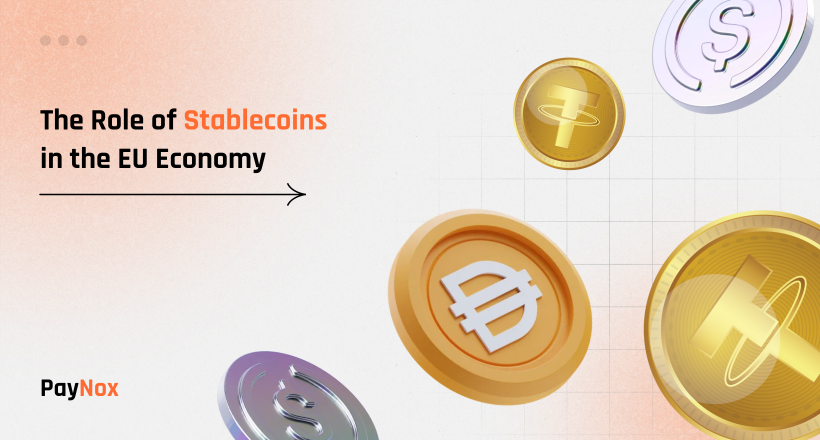
Unlike traditional cryptocurrencies like Bitcoin or Ethereum, which experience price volatility, stablecoins are designed to maintain a stable value, typically pegged to assets like the euro (EUR), U.S. dollar (USD), or commodities like gold.
Types of Stablecoins:
1️⃣ Fiat-backed stablecoins – Pegged 1:1 to a national currency (e.g., USDT, USDC, and EURS).
2️⃣ Crypto-backed stablecoins – Secured by other cryptocurrencies as collateral (e.g., DAI).
3️⃣ Algorithmic stablecoins – Maintain stability through smart contracts and supply adjustments.
Stablecoins provide the best of both worlds**—the speed and efficiency of crypto combined with the stability and trust of fiat currencies.
The Growing Role of Stablecoins in the EU Economy
The European Union is positioning itself as a leader in the regulated digital finance space, and stablecoins are playing a key role in this shift.
1. Enhancing Cross-Border Payments
💶 Fast & Cost-Effective:
Traditional bank transfers in the EU, especially SEPA transactions, can take time and include hidden fees. Stablecoins enable instant settlements at minimal cost.
🌍 Global Reach:
Businesses and individuals can send money across borders without the inefficiencies of the legacy banking system.
2. Financial Inclusion & Digital Banking Transformation
The EU has a diverse financial landscape, with millions of people turning to fintech and digital solutions over traditional banks.
🏦 Stablecoins provide financial access to individuals and businesses who seek alternatives to slow and restrictive banking models.
📲 A growing number of fintech platforms are integrating stablecoin payments, allowing users to hold, send, and spend digital euros or dollars.
3. Regulatory Clarity with MiCAR: Making Stablecoins Safer
🔒 Why MiCAR Matters:
The EU’s Markets in Crypto-Assets Regulation (MiCAR) sets clear rules for the use of stablecoins, ensuring:
✅ Stablecoin issuers are regulated, reducing risks for users.
✅ Full transparency on reserves and audits.
✅ Security & compliance that prevents fraud and misuse.
How PayNox is Leading the Stablecoin Revolution in the EU
At PayNox, we don’t just support stablecoins—we make them work for you. Our platform is designed to provide:
✅ Compliant Stablecoin Transactions – We ensure that all stablecoin payments align with EU regulations, offering users a fully transparent and legal framework.
✅ Instant Crypto-to-Fiat Conversions – No waiting, no hidden fees—just seamless transactions when and where you need them.
✅ Advanced Security & Fraud Protection – AML/KYC measures, real-time monitoring, and encryption keep your assets and data safe.
✅ User-Friendly Integration – Whether you’re a new user or a seasoned crypto enthusiast, PayNox makes stablecoin transactions effortless.
The Future of Stablecoins in the EU
📈 Increasing Adoption – More businesses are accepting stablecoins for payments, payroll, and remittances.
🏛 Integration into Banking – Some EU banks are exploring stablecoin-backed digital solutions.
🔗 Expansion into DeFi & Web3 – Stablecoins are fueling growth in decentralized finance (DeFi), making crypto more accessible to mainstream users.
💡 Stablecoins are not just an evolution of money—they are the future of finance in the EU. And with PayNox, you’re already ahead of the curve.
👉 Want to take advantage of stablecoins the right way? Join PayNox today.