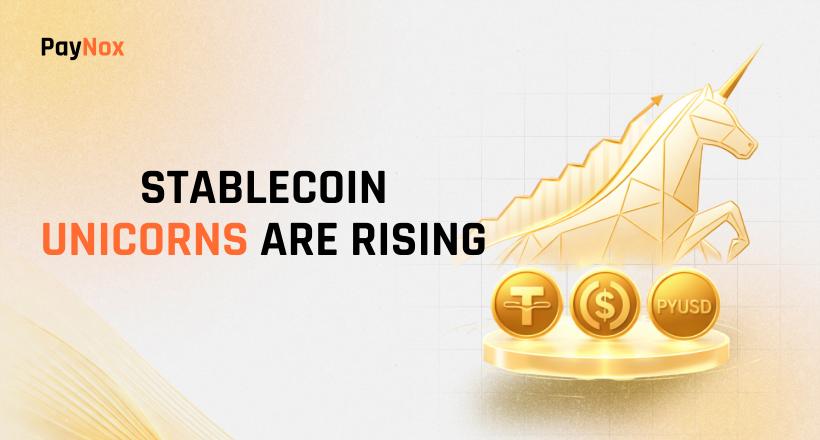
Stablecoin Unicorns Are Rising
The next generation of Web3 unicorns is no longer emerging from trading platforms or speculative tokens.
Instead, the spotlight has shifted to stablecoin infrastructure — the rails powering global, compliant, high-volume digital payments.
Rain’s recent valuation of nearly $2 billion is the clearest signal yet that the market is entering a new phase. 🦄
Why Investors Are Backing Stablecoin Infrastructure
Capital is flowing toward companies that enable stable, predictable payments rather than speculative assets.
Stablecoins solve real problems: settlement delays, cross-border inefficiency, and high transaction costs.
By offering instant settlement and transparent fees, infrastructure providers are taking the role that payment processors once held in Web2.
Merchants Want Predictable, Global Payments
Businesses increasingly adopt stablecoins for:
— frictionless cross-border transactions
— automated payouts
— lower settlement fees
— financial transparency
— real-time treasury management
This is not a future scenario — it’s already happening in e-commerce, SaaS, logistics, and marketplace platforms worldwide.
Regulation Is Becoming a Growth Engine
Clearer rules in the U.S., EU, Japan, and UAE have removed major adoption barriers.
Stablecoins are no longer viewed as “alternative money,” but as regulated payment instruments suitable for enterprise and institutional use.
As compliance frameworks strengthen, investor confidence rises — driving valuations upward.
The Rise of Infrastructure Unicorns
Rain’s nearly $2B valuation reflects a shift:
infrastructure, not speculation, is where long-term value accumulates.
Platforms building custody, liquidity rails, compliance modules, and merchant APIs are becoming essential components of the digital economy.
This is the same pattern seen in early fintech — where companies like Stripe, Adyen, and Checkout.com became giants by owning the rails.
What This Means for PayNox
For PayNox, the trend is clear:
future growth depends on offering secure, scalable, compliance-ready payment rails that integrate seamlessly with both Web2 and Web3.
Stablecoins are no longer an experiment.
They’re becoming the global standard for digital settlement.
Key Insights
— Stablecoin infrastructure companies are becoming billion-dollar players
— Investors prefer predictable payment models over volatile assets
— Regulation is accelerating, not slowing, growth
— Merchants want stable, fast, transparent settlement
— The next fintech giants may emerge from Web3 payment infrastructure
Stablecoins aren’t just “part of Web3” anymore — they’re becoming the backbone of global digital finance.