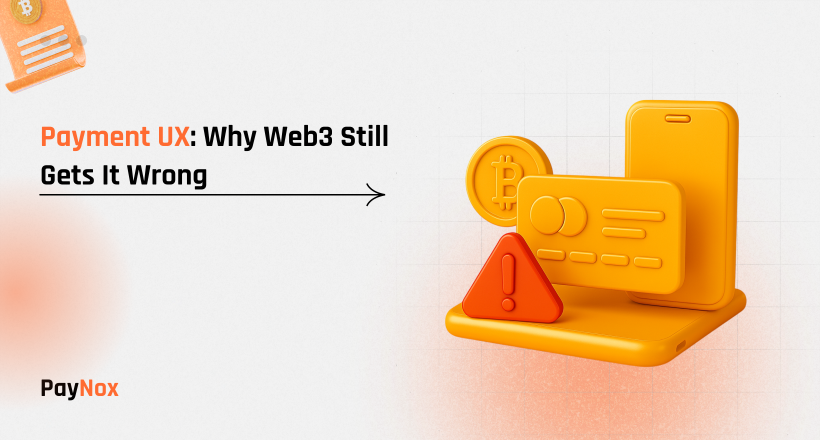
Payment UX: Why Web3 Still Gets It Wrong
Crypto may have come a long way — but payment UX remains one of its biggest problems.
Users still face:
— Complex wallets and signers
— Unclear gas fees and costs
— Confusing transaction flows
— No feedback after sending payments
The result? Frustration. Lost trust. Missed adoption.
🧭 What still goes wrong today
Here’s what most platforms still get wrong in 2025:
● Complex onboarding — Users are forced to set up external wallets or manage seed phrases, instead of fast, app-native experiences.
● Unpredictable fees — Users are hit with surprise gas fees or slippage, with no clear visibility.
● Confusing flows — Payment confirmations lack feedback — users don’t know if the payment succeeded.
● Too many steps — The more screens, clicks, and wallet interactions — the more drop-offs.
💡 Why this matters now
In 2025, user expectations have changed.
Crypto users want fast, intuitive, predictable payment experiences — like they get from Web2 fintech.
If platforms fail to deliver this, they lose users to those that do.
Great UX isn’t a bonus — it’s the foundation of user trust. And trust is what drives growth.
🔍 How PayNox solves it
At PayNox, we redesign crypto payment UX around user needs:
● Embedded onboarding — no external wallet hurdles
● Transparent fees — no surprises
● Instant confirmations — so users always know what’s happening
● Streamlined flows — fewer steps, higher conversion
Because when UX is done right — adoption follows.
✅ Final thought
Web3 still gets a lot wrong with payment UX — but 2025 is the year that must change.
Platforms that fix this now will lead the next wave of adoption.
At PayNox, we’re helping them do exactly that.
Follow us on Telegram or LinkedIn for more on building trust through great UX.