Partnership Rails
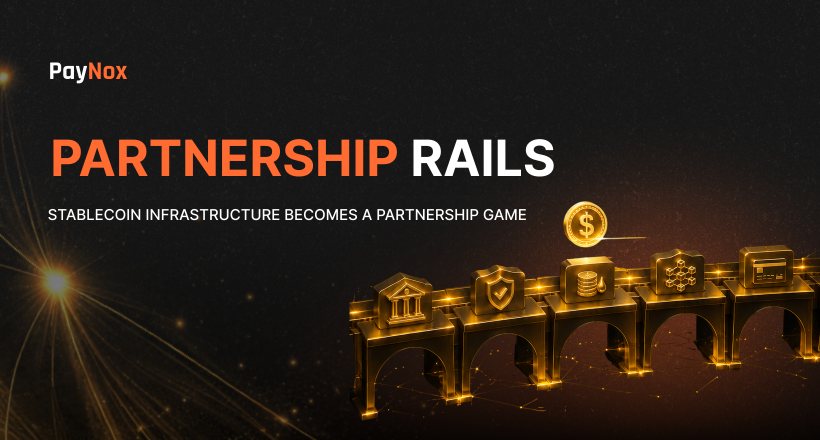
Stablecoin infrastructure is becoming a partnership game. ⚙️
For a long time, stablecoin payments were discussed mainly through the asset itself: the token, the network, the wallet, or the transaction speed. But real payment infrastructure is much broader than that.
To support business payments at scale, stablecoins need more than one technical solution. They need banks, liquidity providers, compliance partners, settlement channels, custody systems, payment processors, and fiat rails working together.
Why one company is not enough
A stablecoin payment may look simple from the outside. A user sends value, and another party receives it. But behind that movement, many layers have to work correctly. 🔐
There must be liquidity for conversion. There must be compliance logic to reduce risk. There must be settlement channels to complete the flow. There must be fiat access when businesses need to move between crypto and traditional finance.
If these layers are disconnected, the payment experience becomes fragile. Transactions may move, but businesses can still face delays, unclear settlement, high costs, or operational uncertainty.
The advantage is connection
The next competitive advantage in stablecoin payments will not belong only to companies that “offer stablecoins.” It will belong to companies that can connect the ecosystem. 🧩
This means building infrastructure where crypto rails, banking partners, liquidity sources, compliance systems, and settlement processes work as one coordinated flow.
For merchants and fintech companies, this is what creates real value. They do not only need access to stablecoins. They need stablecoin payments that are reliable, compliant, liquid, and connected to the broader financial system.
Partnerships become infrastructure
Stablecoin adoption in business payments will depend on how well different players can cooperate. Banks provide access to regulated finance. Liquidity providers support conversion and execution. Compliance partners help manage risk. Settlement channels create finality. Payment platforms connect everything into a usable product. 🌐
This is why stablecoin infrastructure is moving from a single-product model to a partnership model.
The strongest systems will not be the ones that try to do everything alone. They will be the ones that connect the right partners into one reliable payment layer.
Final thought
Stablecoins may be digital assets, but stablecoin infrastructure is becoming a network of partnerships. ✨
The future of stablecoin payments will be defined not only by the asset, but by the rails behind it: banking, liquidity, compliance, settlement, and operational control working together. 🚀