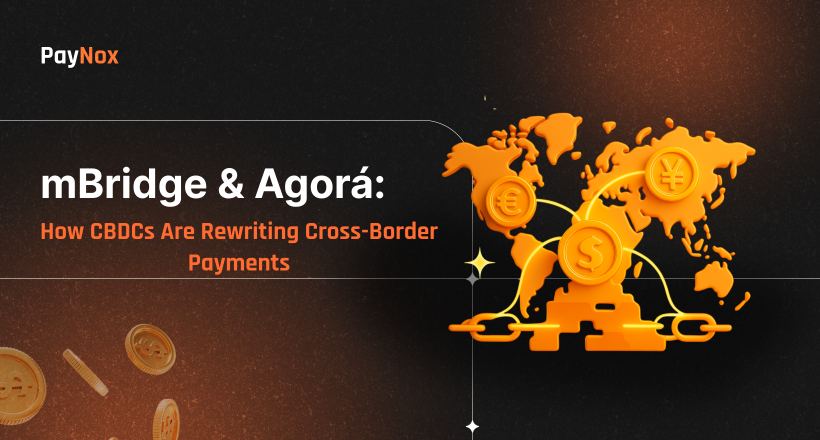
mBridge & Agorá: How CBDCs Are Rewriting Cross-Border Payments
Cross-border payments are the backbone of global trade — but today, they’re slow, expensive, and opaque. The SWIFT network, while reliable, can take days to settle transactions and involve multiple intermediaries that add cost and friction.
In 2025, two major initiatives are aiming to change that: mBridge and Agorá.
🔹 What is mBridge?
mBridge is a project by the BIS Innovation Hub in partnership with central banks from Hong Kong, China, the UAE, and Thailand. It enables direct cross-border transfers using multiple CBDCs on a single shared ledger. Transactions settle in seconds, with no need for correspondent banks.
🔹 What is Agorá?
Agorá is a collaborative platform backed by major global banks to issue and settle tokenized deposits. This is designed for wholesale transactions — corporate payments, trade finance, and interbank settlements — making them faster, programmable, and transparent.
💡 Why this matters
Speed — Near-instant settlements remove days of waiting.
Cost efficiency — Fewer intermediaries mean lower fees.
Transparency — Every step recorded on a secure, permissioned ledger.
🌍 Real-world impact
For exporters, this means faster receipt of payments. For migrant workers, cheaper remittances. For regulators, clearer oversight of cross-border flows.
While challenges remain — interoperability with existing systems, regulatory harmonization, and cybersecurity — the direction is clear: programmable, interoperable CBDC networks could replace legacy rails within the decade.
The race is on, and those who adapt early will lead the next era of global payments.
Follow us on Telegram or LinkedIn for deep dives into the future of finance.