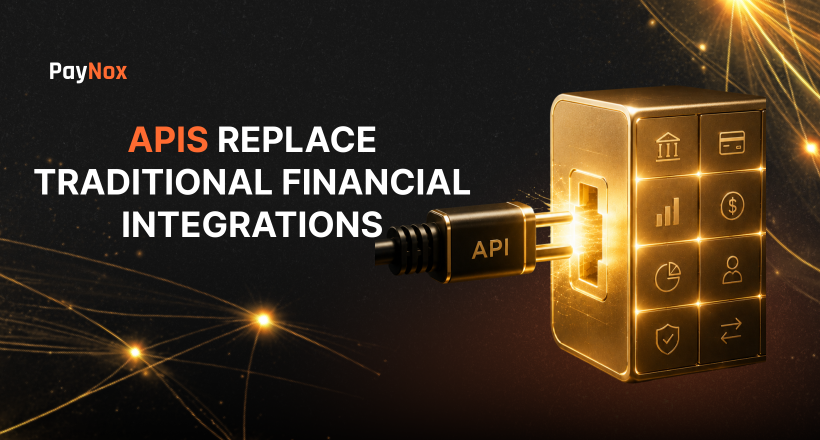
APIs Replace Traditional Financial Integrations
The process of building financial products has historically been defined by complexity. Integrating with banking systems requires time, resources, and deep technical coordination.
These integrations often involve lengthy approval processes, custom development, and ongoing maintenance. As a result, launching a new fintech product can take months — sometimes longer.
This creates a significant barrier to innovation.
The Limitations of Traditional Integrations
Traditional financial infrastructure is not designed for speed or flexibility. Each integration is unique, and systems are often fragmented across institutions.
Developers must adapt to different standards, protocols, and requirements. This slows down product development and increases operational complexity.
Even simple features can require significant effort to implement.
The Rise of Web3 APIs
Web3 APIs introduce a fundamentally different model.
Instead of building direct integrations with financial institutions, developers can access financial functionality through standardized, programmable interfaces. These APIs abstract the complexity of underlying systems, allowing teams to focus on product development.
This reduces the need for custom integrations and accelerates the development process.
Faster Time to Market
One of the most significant advantages of Web3 APIs is speed.
Features that previously required months of development can now be integrated in a fraction of the time. This allows companies to iterate quickly, test new ideas, and respond to market demands more effectively.
In competitive markets, speed is not just an advantage — it is a requirement.
A Modular Financial Stack
As APIs replace traditional integrations, financial infrastructure becomes more modular.
Developers can combine different services, build on top of existing components, and create flexible systems without being tied to a single provider.
This modular approach enables innovation at scale.
Conclusion
The shift from traditional integrations to Web3 APIs reflects a broader transformation in financial infrastructure.
Systems are moving away from rigid, institution-based models toward flexible, programmable environments.
For companies building financial products, this changes everything.
The ability to integrate quickly, adapt easily, and scale efficiently becomes a core competitive advantage.
In this context, Web3 APIs are not just a technical improvement.They are a new foundation for how financial systems are built.